Tuesday, May 30, 2006

The Outdoor Classroom

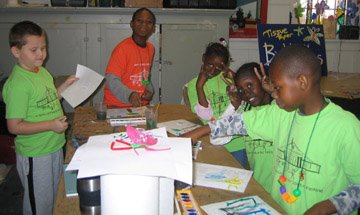
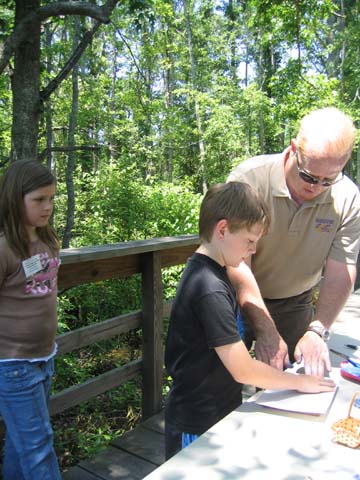
On Friday, May 19, Education Curator Mark Brown participated in the Education Day, an Outdoor Classroom project at the Laurel Sportsplex.

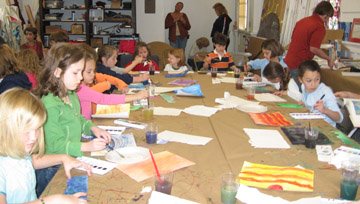
Here, he helps Jones County fourth-graders make a print from a wood-block:


For more information, click here

Wednesday, May 24, 2006

Battle for Biloxi - New York Times

Battle for Biloxi - New York Times

From the New York Times Sunday Magazine, what looks to me like a pretty thorough description of the rebuilding process in Biloxi.

* You must register to read articles at nytimes.com, but registration is free.

a little summer reading

Conservation Fiction

The link above goes to a list of fictional works that feature art conservators &/or restorers. The idea of restoring or conserving a painting, that then becomes central to an unfolding mystery, is pretty popular with novelists these days. I'm partial to Iain Pears' art history mysteries, as well. Arturo Perez-Reverte's "The Flanders Panel" is probably one of my favorite books on the list. This list is well-annotated, and you can find a lot of these through your local library.

Jonathan Harr's "The Lost Painting," about the rediscovery of a Caravaggio masterpiece, is non-fiction but reads like a really excellent mystery novel.

Wednesday, May 10, 2006

Got something cool?

Encyclopedia Smithsonian: Identification and Appraisal of Objects

Here's a link to information about identifying and appraising artworks and other objects. LRMA, like the Smithsonian, does not provide these services at all. This Smithsonian web page should point you in the right direction.

Just in case...

Harpers Ferry Center: Wet Recovery

Hopefully no-one reading this will need this information, but hurricane season is approaching, we just had a nasty rainstorm here in Laurel, and the time seems right for it. Click on the link for information on salvage, recovery, and stabilization of wet paper, artworks, and so forth. Ultimately anything of real value will likely need a professional conservator, but knowing what to do as soon as something gets soaked is essential.

The National Park Service provides a whole line of "conserve-o-grams" which will answer all manner of questions about how to take care of your important stuff.

Monday, May 08, 2006

Only one more week!


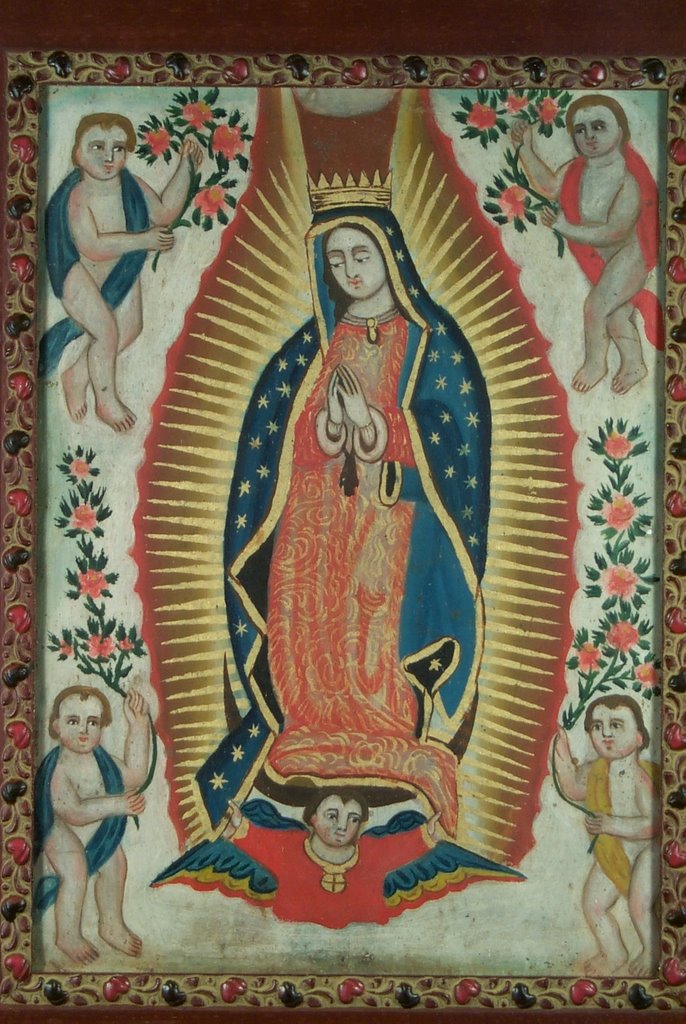
"Pinturas de Fe: The Retablo Tradition in Mexico and New Mexico" closes this coming Sunday - May 15. If you've been meaning to get to see the show and just haven't gotten here, your time is running short.

Jim Meade exhibition


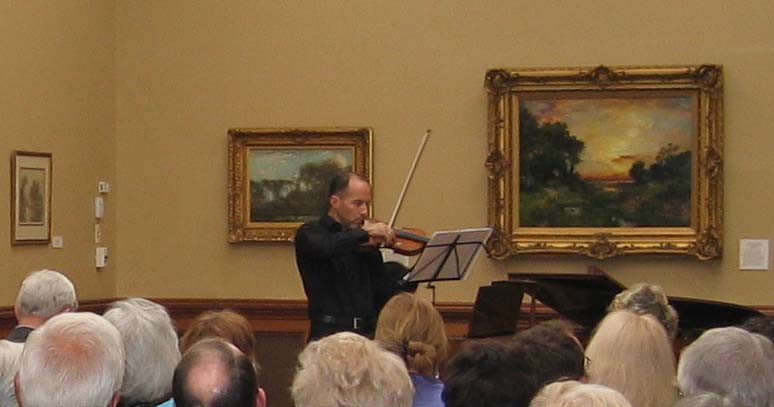
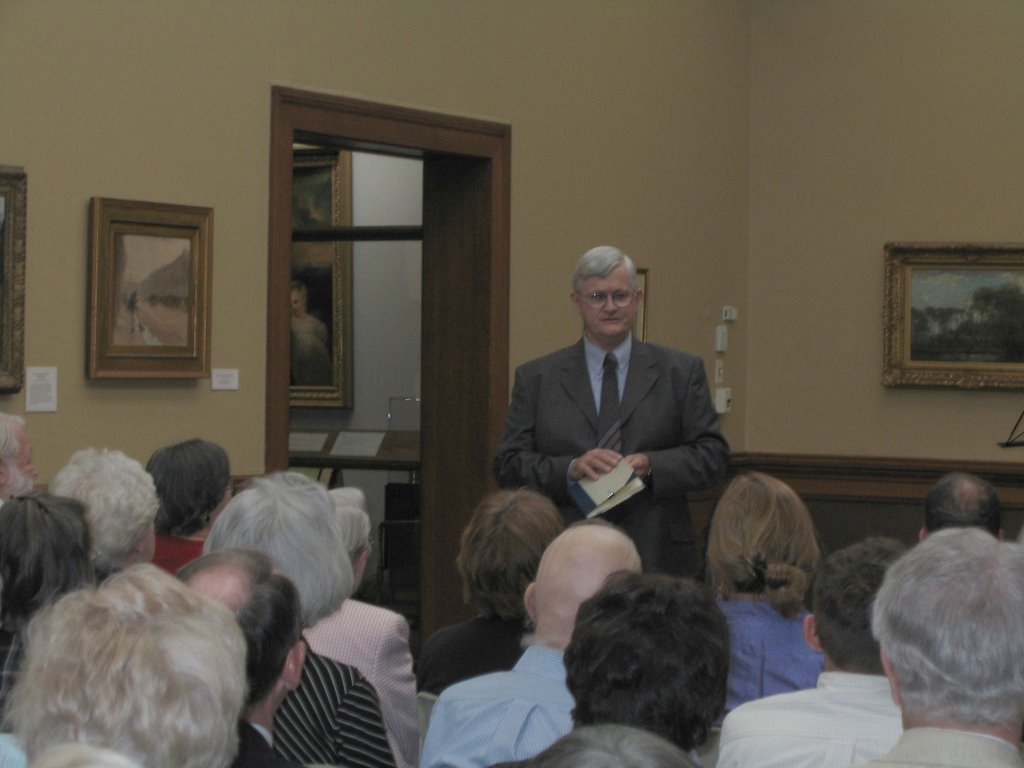
On Sunday April 23, the exhibition "Curator's Choice: Jim Meade" opened. We started with a performance by Stephen Redfield (violin) and Theresa Sanchez (piano), who performed a few of Jim Meade's favorite Puccini works. Meade then followed up with a talk about his work and his career, and a walk around the gallery. The show is up through July 2 in the Stairwell Gallery.

Under the Tuscan Moon


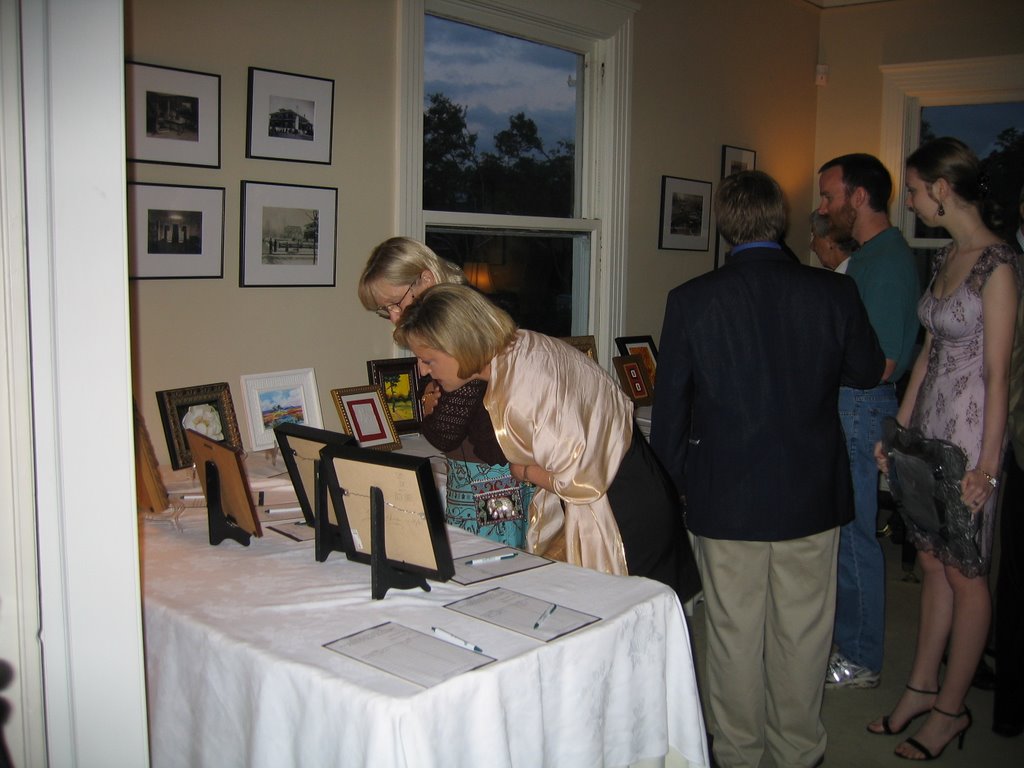
On April 21, our Guild of Docents and Volunteers hosted a fundraiser for the Rogers-Green House, the family home of Lauren Rogers that now belongs to LRMA. We use the space for offices, museum events, and private parties. The house, built in 1904, is in excellent condition but of course always needs upkeep. Hence: an annual fundraiser. This year's theme, "Under the Tuscan Moon," resulted in Italian food and gorgeous floral decorations all over the house.

Here, a view of the dining room before the party got started:


Guests examine the artworks in the silent auction:

Wednesday, May 03, 2006

Recovering Collections & Artifacts

The Mississippi Department of Archives & History is co-sponsoring a series of workshops for Mississippi residents that might be of interest to many. I'll quote directly from the press release:

"These half-day workshops are open to all Mississippians.... Each session will deal generally with all types of objects but then focus on a particular category. Through lecture, demonstration, and question and answer, participants will learn how to respond promptly and effectively to stabilize damaged objects and then seek further help as necessary."

The schedule is as follows:

Biloxi, Saturdays 9:30 am - 12:00 pm, Margaret S. Sherry Memorial Library
May 20 Textiles & costumes
June 24 Photographs
October 14 Objects (glass, metal, ceramic, leather)
November 18 Furniture and Wooden objects

Jackson, Sundays 1:30 - 4:00 pm, MDAH, Winter Building
May 21 Textiles, costume
June 25 Photographs
September 24 Paintings and painted surfaces

Single sessions will be held in Oxford, Cleveland, Laurel, Columbus, and Natchez.

I wish I had a website to direct you to, but I can't find the schedule anywhere online. The contact person is Eleana Pope at the MDAH. If they put the info online, I'll add a link.
Wednesday, April 26, 2006

museum careers

AAM: American Association of Museums

People ask a lot of staff members what kind of job opportunities there are in museums. The short answer is: there are lots of different kinds of museum jobs, with one caveat, which is this: you should probably be willing to relocate. A minority of museum professionals work in their hometowns, though LRMA is an exception. Job opportunities are not thick on the ground, but they are out there.

A longer answer:

Museums range from the tiny (one staff member) to the enormous (the thousands of employees at the Smithsonian museums). Topics range from teapots to art, archeology, coffee, neon signs, history, science, archeology, medicine, timber, labor, tenements, and so on. Each museum, regardless of focus, has four primary functions: collection, preservation, education, and exhibition. Museum employees can include conservators, curators, directors, business managers, fund raisers, development officers, grant officers, exhibition designers and fabricators, IT staff, educators, docents, and more. Whatever your skill and interest, you can probably find a niche in the museum profession. A good place to start looking for information is the website of the American Association of Museums, which website I have linked above.

Tuesday, April 11, 2006

Emerging Artists Exhibition


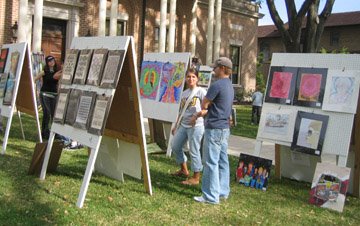
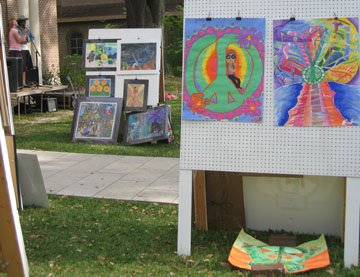
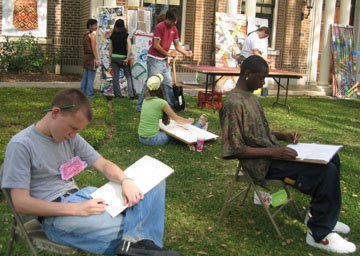
Each year, Mandy and Mark organize an Emerging Artists Exhibition which takes place on the front lawn of the museum. It's open to students from four area high schools, and includes performance and art demonstrations in addition to artworks on display. It's been a beautiful spring so far, and we had another pretty day for this event, which took place on Thursday, April 6.

Friday, April 07, 2006

Lecture Hall closing...

on Tuesday, April 11, from 11 am to 1 pm, the Lower Level Lecture Hall will be closed for a meeting. The rest of the Pinturas de Fe exhibition will still be open to the public.

Tuesday, April 04, 2006

Very Special Art Festival


One of our favorite art activities each year is the Very Special Art Festival, a free program for kids with disabilities. As far as I know, it's the only activity they don't have to share with the rest of the school, and a lot of them don't get to go on school-wide field trips.

This year's theme was "A Magical Day." We had six different art activities, including making tissue paper butterflies and beaded necklaces. We took a "magic photo" (a Polaroid!) of each kid with his or her creations, and we followed up with a performance by a wonderful magician, Joseph Harris, and then story telling by staff members.

Here, Allyn helps students makes their own jigsaw puzzles:


Joseph Harris entertains with magic in the LRMA lobby:


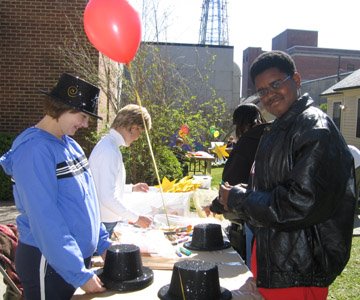
Donnelle helps students customize their glittery magicians hats and magic wands:


Tommie reads a story to students from West Jones:


Mandy painted faces for both kids and their helpers:


Thursday, March 30, 2006

all about museums in the New York Times

Arts - Museums - New York Times

Their annual special on museums is so chock-full of information, I haven't had a chance to read everything. There are more than a dozen articles on museum topics ranging from antiquities to Alcatraz to kids' view of Jackson Pollock paintings. It's an excellent gathering of articles about a lot of the current issues for museums today.

Tuesday, March 28, 2006

Teens, Art, and Museums

MoMA.org | Red Studio: A Site for Teens

The link goes to a website set up by the Museum of Modern Art that is both by teens and for teens. It includes teens' interviews with artists, an upcoming art contest, polls, art activities, and so forth. It looks like a good tool for art teachers, and may serve as a good prototype for other museums who want to work with teens and technology.

Tuesday, March 21, 2006

It's a beautiful day at LRMA....

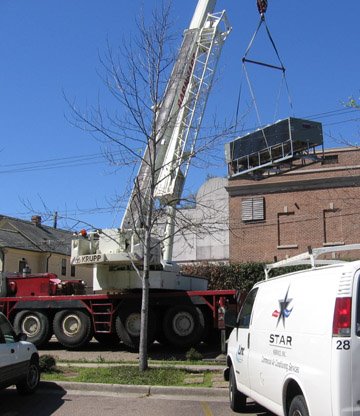
...perfect for cranes, utility trucks, and mechanical excitement. If you've ever wondered what it takes to keep 22,000 square feet of museum air conditioned in the brutal Mississippi summer, these pictures may answer that question. Our 20+ year old chiller wore out on us, and we got a new one today. Here's the crane:


Here, the old chiller is coming up and out:


Here, the new one is going in:


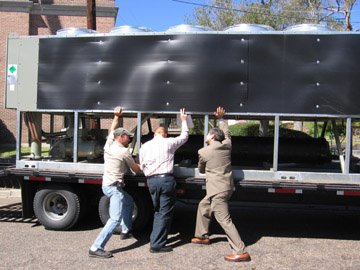
In an effort to save money, Todd, Mark, and George offered to do the moving themselves instead of using the crane:


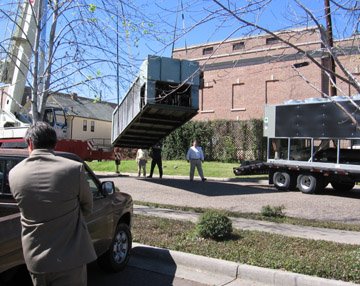
Here you see just how big these things are: the old one on the way down, the new one on the flatbed to the right:


This is merely one component of our complex HVAC system, which is designed to keep the artworks in optimal conditions. Artwork will last longest if kept at about 65 degrees, and about 50% humidity, which is why most people find museums a bit chilly.

Friday, March 17, 2006

Spring Break Art Break: picture goodness


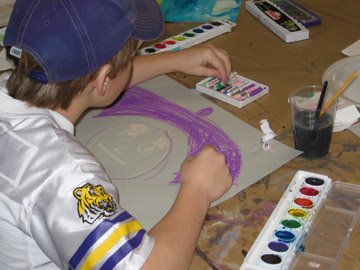
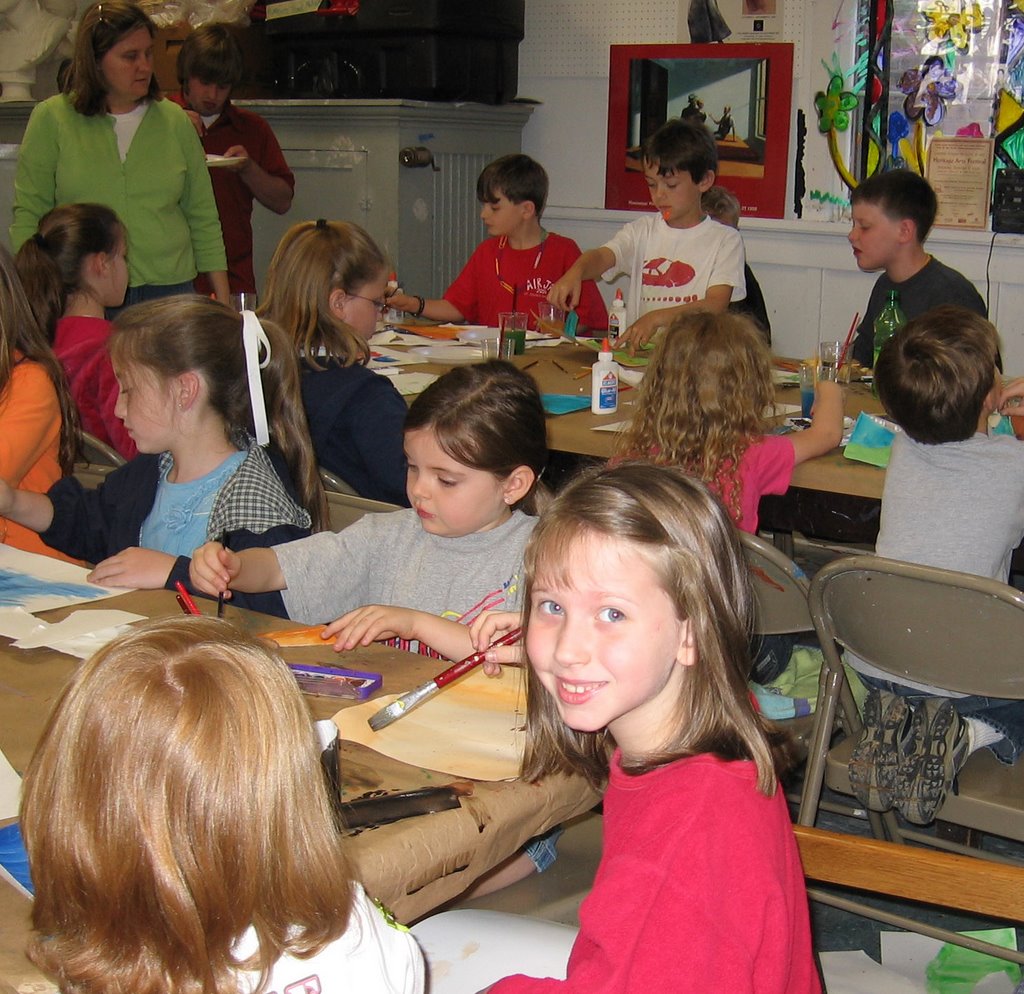
This Tuesday, Wednesday, and Thursday, the education department held art classes each morning and afternoon. The morning classes were for K-3rd grade, afternoon for 4th-6th grades. The students made collage and watercolor landscapes, visited the museum for a tour, and made self-portraits in pastel and watercolor.

Tuesday, March 14, 2006

Spring Break Art Break has Sprung

and as of now, all classes are full to the brim.

We'll post pics of the fun later this week.

why study art history?

I read this on a listserv and reproduce it here because I think it's important to remember why we do what we do, why museums and art history are important:

"Off the top of my head, here's why I think one should study art history:

1. To become an educated person
2. To achieve visual literacy
3. To have historical referents for making sense of the world around you
4. To translate visual information into verbal form (both spoken and written)
5. To understand the past in the way historical peoples saw their cultures or wanted their cultures understood
6. To make sense of the present realities, one must be aware of how those realities became the way they are
7. To know how to research visual art to integrate our society with the distant and recent past
8. To comprehend how visual imagery communicates information
9. To understand the mechanisms of culture
10. To make the connections afforded by a liberal arts education and its different disciplines
11. To provide the reasons for societies to cohere
12. To recognize the motivations behind creativity
13. To become a better person


Anne Swartz, Ph.D.
Professor of Art History
Savannah College of Art and Design
"

Thursday, March 09, 2006

Spring Break Art Break!

There are still a few slots available for next week's Spring Break Art Break kids' classes!

click here for info:

Spring Break Art Break

Or just call the museum at 601-649-6374 and ask for Pam, who is in charge of registration.